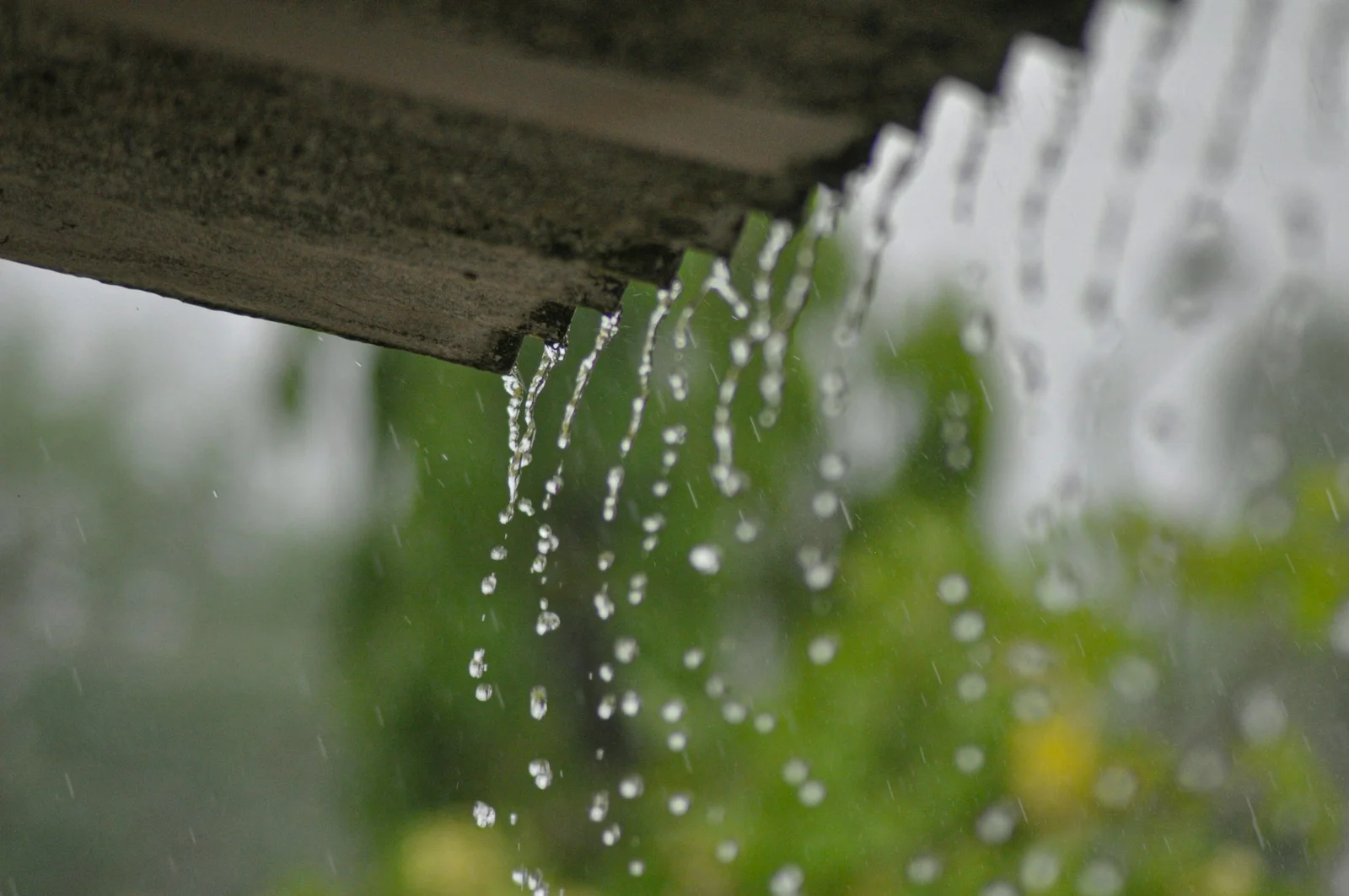
Every northeast monsoon, Chennai prepares for floods. A few months later, it prepares for water shortage. It is the same rain in both cases. The difference is what happens to it in between.
A recent Deccan Chronicle report (28 October 2026) puts a name on this gap: the missing link between rain and rainwater storage. Here is what the report found, and what it means for your home, apartment or factory.
Key takeaways
- Chennai receives over 1,000 mm of rain a year, but has no comprehensive way to store the surplus released from its reservoirs.
- Experts want an integrated network of reservoirs, lakes, ponds and neighbourhood recharge structures.
- Rooftop harvesting is the part you control. It works best with a first-flush filter and the right recharge design for your soil.
Why does Chennai lose so much rain to the sea?
The report centres on the Chembarambakkam reservoir. During the monsoon, officials keep its level at around 21 ft, against a full level of 24 ft, so there is room for new inflows. The surplus is released into the Adyar river and drains into the sea.
That buffer is necessary for flood safety. The problem, according to environmental activist V. Santhanam, is that nothing captures the released water afterwards.
The numbers from 26 October 2026 show how much room there still was:
| Chembarambakkam reservoir | Reading (6 am, 26 Oct) |
|---|---|
| Water level | 14.76 ft (full level: 24 ft) |
| Storage | 1,488 mcft, about 41% of 3,645 mcft |
| Inflow / discharge | 150 cusecs / 208 cusecs |
Source: Deccan Chronicle, 28 October 2026.
What do experts suggest instead?
The report points to a system, not a single fix.
- Link the lakes. Santhanam suggests diverting surplus water to southern-suburb lakes such as Thiruneermalai, Pallavaram, Chitlapakkam, Sembakkam and Kilkattalai.
- Restore what already exists. Government data lists around 3,600 water bodies across Tiruvallur, Kanchipuram and Chengalpet. Restoring them to original capacity could serve south Chennai, experts argue.
- Harvest beyond rooftops. Roads, pavements, parks, playgrounds and parking areas can all feed recharge structures.
- Store underground. Activist Darwin Annadurai wants underground storage points and a separate agency to maintain street-level recharge structures.
- Rethink sponge parks. Many were built with concrete surfaces that block absorption, so their design needs review.
Why one design will not fit all of Chennai
A senior scientist at the Central Groundwater Board cautioned against uniform designs. Clay acts as an impermeable layer and slows stormwater from reaching deeper ground.
In practice, the right structure depends on your plot:
- Sandy or permeable soil: percolation pits, recharge trenches or recharge wells.
- Clayey soil: recharge shafts that go past the clay layer, or tank storage for direct reuse.
- Limited space: underground storage tanks linked to the downpipe.
What can a single rooftop actually collect?
A simple rule: 1 mm of rain on 1 m² of roof gives about 1 litre of water. Take a 150 m² roof and a conservative 1,000 mm of annual rain. That is 150,000 litres of rain falling on your roof each year. After allowing for losses (a runoff factor of about 0.8 is commonly used), you could still capture roughly 120,000 litres.
This is an illustrative estimate. Actual yield depends on roof material, rainfall pattern and storage size.
Multiply that by thousands of buildings and the missing link starts to close from the bottom up.
Government push: the ‘Thuli’ campaign
The state has launched ‘Thuli’, a rainwater harvesting campaign. Local bodies have been told to inspect existing systems in homes, offices and government buildings, clean filter chambers and recharge pits, and restore defunct structures where technically feasible. Officials describe it as a continuous process with periodic inspections.
If you already have a pit or tank, now is the time to check it, before the heavy rain arrives.
Why the filter decides whether your system works
Many roof systems fail quietly. Leaves, dust and bird droppings choke the pit or foul the tank, and the system is abandoned within a couple of seasons. The first rain of the season is the dirtiest, and that is exactly when you need protection.
A good filter handles this automatically. The Rainable Midi-150 is built for it:
- Automatic first flush: the dirtiest initial runoff is diverted before it reaches storage.
- Self-cleaning vortex filtration: debris is carried away, so there is no regular cleaning chore.
- 280-micron SS316 stainless steel mesh with filtration efficiency above 95%.
- Handles roofs up to 150 m² at a flow of 3.4 litres per second.
- Oxygen enrichment: aeration as the water enters the tank helps keep stored water fresher.
- Zero power, zero consumables and a 10-year warranty.
- German-engineered design principles behind the filtration technology.
Filtered rainwater is potable-ready after a final disinfection step. Use proper disinfection (such as chlorination or UV) before using it for drinking.
A 4-step checklist for your own building
- Measure your roof and note its material and slope.
- Check your soil (sandy, clayey or mixed) to choose between recharge and storage.
- Fit a first-flush, self-cleaning filter on every downpipe.
- Inspect before each monsoon: clear filter chambers and pits, and confirm that water reaches storage or recharge.
Frequently asked questions
Is rainwater harvesting compulsory in Chennai?
Rainwater harvesting has been a requirement for buildings in Tamil Nadu for years, and the current ‘Thuli’ campaign is pushing inspections and restoration of defunct systems. Check with your local body for the rules that apply to your property.
How much rain can a 1,000 sq ft roof collect?
A 1,000 sq ft roof is about 93 m². With 1,000 mm of annual rain and a 0.8 runoff factor, that is roughly 74,000 litres a year. Real yield varies with your roof and local rainfall.
Which is better: recharge pit or storage tank?
It depends on soil and space. Recharge suits permeable soil and helps the groundwater table. Storage suits clayey soil or anyone who wants water for direct use. Many buildings combine both.
Do I need a filter for groundwater recharge?
Yes. Without one, silt and debris clog the pit and carry contaminants into the borewell zone. A filter keeps the system working for years.
Can I drink harvested rainwater?
Filtered rainwater is potable-ready after a final disinfection step. Do not drink it untreated.
Conclusion: close the link from your rooftop
Chennai’s storage gap will take policy, lake restoration and neighbourhood infrastructure to fix. But every roof that captures its own rain, cleanly and reliably, reduces both flood runoff and summer scarcity. Start with the roof you control.
Ready to stop your roof’s rain from going to waste?
Talk to the Rainable team about a filter and recharge design that suits your roof and soil.
Call +91 99449 12302 or write to info@rainable.in
Get a Free ConsultationSource: “Chennai: Missing Link Between Rain and Rainwater Storage”, Deccan Chronicle, 28 October 2026. Reservoir figures and expert views are as reported there. The roof-yield calculation is Rainable’s illustrative estimate.